• About Us
  • Commercial
  • Residential
    • All Blogs
    • Projects
    • Travel + Inspiration
    • Bookshelf
    • News + Resources
  • Connect
Menu

Rush Dixon Architects

Modern design that pursues better spaces for living and doing business
  • About Us
  • Commercial
  • Residential
  • Musings
    • All Blogs
    • Projects
    • Travel + Inspiration
    • Bookshelf
    • News + Resources
  • Connect

This blog is a collection of musings on our on-going research, design, inspiration, books and travel. As only Es Devlin can articulate, “The piece that one makes is the tip of the iceberg of the research that went into it. Allow your research to take you as far as you want; allow one thought to lead to another. Don’t be afraid to go down a rabbit hole of research. Find the patterns.” This is not to claim we are experts on anything included in the following entries, rather life-long learners enjoying the process.

Daniel Island Recreation Center

June 27, 2023

“Rush Dixon Architects listened to our goals for the building - function, aesthetics, maintenance, budget - and produced a design that captured those goals and emphasized the surrounding community.”

Edmund Most, Deputy Director of Capital Projects - City of Charleston

One of the true highlights of our career began back in the summer of 2017 when we submitted our qualifications and interviewed for the competitive architectural selection to design a new recreation center for the City of Charleston. Our firm was ultimately selected by the committee to design the 20,000sf Daniel Island Recreation Center which would serve as both a recreation center and community gathering space. The design process kicked off with numerous department meetings and facility tours to better understand the City’s functional needs, programmatic goals, maintenance resources, lessons learned etc. The resulting design includes two main spaces - a basketball court and a multi-purpose meeting room - which are evident in the building’s massing. Rounding out the program are small conference rooms, yoga space, cardio center, concession kitchen and supporting offices.

The gymnasium is sized and striped for basketball, volleyball and pickleball with the option to have half courts and spectators.

The Multi-Purpose Room captures views of nearby Governor’s Park and offers the City a place for meetings and light recreation. The room can be divided into two smaller areas for flexibility and uses the Armstrong Woodworks ceiling system for both acoustics and aesthetics.

The design is inspired by the agricultural history of the site in broad strokes through architectural massing and materials, and specifically, through the storytelling of the local indigo industry on the interiors. The use of Trespa Phenolic Wall Panels, both in white and grey, provide a textured wall harkening to the wood planks historically used for barns, with the benefit of durability and low maintenance for this civic use. The project gained approval from the City of Charleston’s Design Review Board, Daniel Island Architectural Review Board, Mayor’s Design Review, Technical Review Committee along with the required site approval entities for new development. The construction spanned from 2019 to 2021, was ushered successfully through hurricanes and the pandemic by our friends at Hill Construction and ultimately opened to the public in August 2021.

Client: City of Charleston

General Contractor: Hill Construction

Civil Engineering + Landscape Architecture: Seamon Whiteside

Structural Engineer: ADC Engineering

Mech / Plumbing / Electrical Engineer: Charleston Engineering

Building Envelope: SKA Consultants

Cost Estimating: Aiken Cost Consulting

Photography: Chris Smith

In All, Projects Tags daniel island recreation center, daniel island, city of charleston, charleston, civic architecture, recreation architecture, recreation center, community center, community design, gymnasium, multi-purpose center
Comment

Eero Saarinen's TWA Flight Center

June 16, 2023

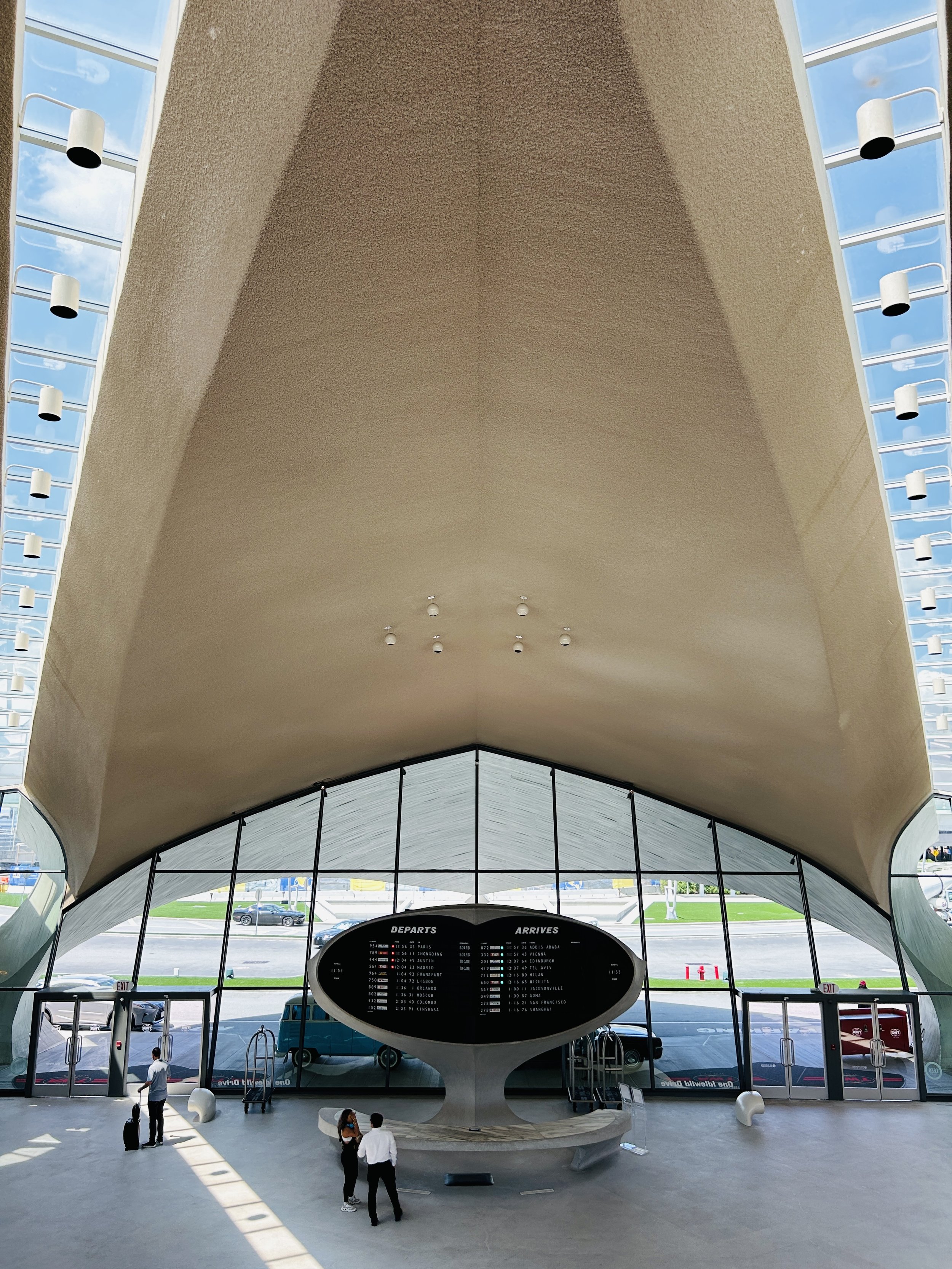
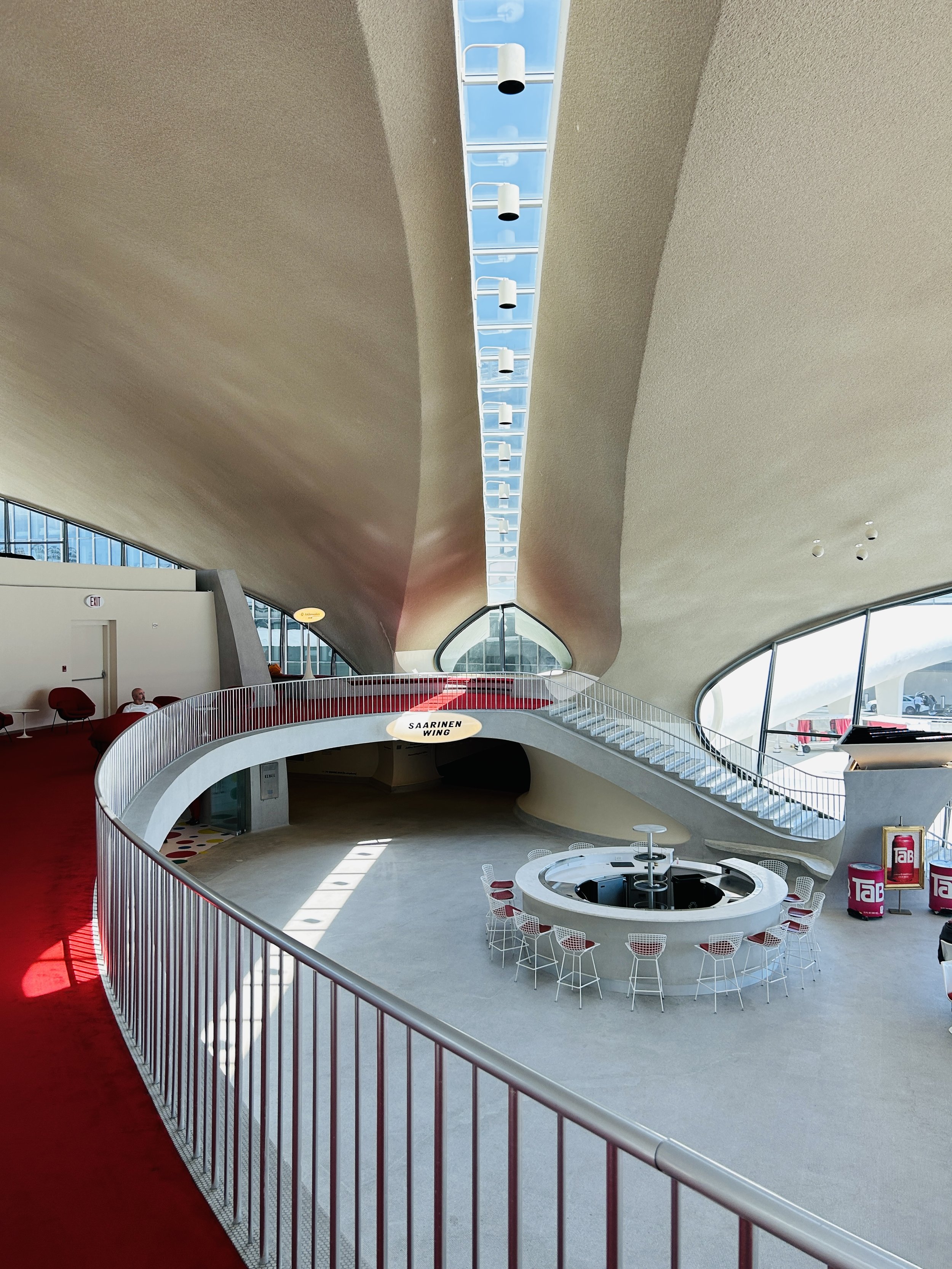
It’s nearly impossible for us to fly into New York City without creating a path that runs through the former TWA Fight Center, a stunning example of mid-century architecture. Designed by Finnish-American architect, Eero Saarinen, and completed in 1962, the building served as the main terminal for Trans World Airlines at John F. Kennedy International Airport. An aspirational nod to the possibilities of aviation, modern air travel, design, and engineering, the building's dramatic wing-shaped roof, with its swooping curves and steel supports evokes a sense of flight and movement. Inside, the terminal's open spaces and light-filled atrium were designed to create a sense of excitement and adventure for passengers.

IMG_7634.jpg
IMG_7632.jpg

A confluence of sculpture and engineering, the building design uses a reinforced concrete shell and angled expanses of glass to create nobility and wonderment for its visitors. After various changes in the airline industry over the decades (not the least of which includes larger planes and Jet Blue’s Terminal 5 built adjacent to it), the building now serves as the lobby for the new TWA Hotel, thus allowing a new generation of visitors to experience this icon.

“Experimentation can present great dangers, but there would be greater danger if we didn’t try to explore at all.” Eero Saarinen

In All, Inspirations Tags mid-century, mid-century modern, mid-century architecture, architecture, twa, twa terminal, twa flight center, eero saarinen, airport design, airport terminal, reinforced concrete, jfk airport, two hotel, beyer blinder belle, design inspiration, modern architecture, modern design
Comment

Jim Irvin, co-owner of Firefly Distillery and one of this year’s winners of the Icon Honors Award presented by SC Biz News.

Meet Jim Irvin

May 9, 2023

You may know Jim Irvin even if you think you don’t. He is one of the guiding forces of Charleston’s hospitality industry, effective at creating special places for Lowcountry residents and tourists alike, a champion of the local business community and that of South Carolina at large, and now one of the 2023 SC ICON Honor Award Winners. We are lucky enough to have worked for Jim and his partners on several building projects and while he has received many accomplishments, awards and accolades throughout his career, perhaps the most noteworthy is his track record of innovation, resilience and reinvention. He is a ‘Jack of many trades’ and master of each of them. 

  • Residential and Commercial Builder / Developer - After studying at chemistry, biology and accounting at Vanderbilt + Sullivan University, he began what would become a 40 year chapter as a residential and commercial builder / developer starting in Kentucky and South Carolina. After relocating to the Lowcountry in 1979 Jim built houses in Crowfield, Kiawah Island and IOP including over 60 spec houses through the 1990s.

  • Irvin House Vineyard - In 2000 Jim and his wife Ann purchased a farm on Wadmalaw Island and after a trip to a Florida winery were inspired to begin a vineyard. They would eventually establish Irvin House Vineyard, Charleston’s only domestic winery which produced Muscadine Wine, a wine made from the American indigenous grape. Both Jim and Ann were fundamental members of Certified SC Grown throughout Irvin House Vineyard’s chapter. The wine was successfully distributed to every major grocery store in South Carolina thanks to a relationship with Scott Newitt who was a statewide distributor in South Carolina. 

Original Firefly Distillery on Wadmalaw Island, SC.

  • Firefly Distillery is Born - The vintner / distributor relationship led to a friendship and ultimately to business partners in 2006 when Jim and Scott joined forces to create Firefly Distillery. In the same year they produced their first product, a Muscadine wine vodka, which earned 89 out of 100 points from the Beverage Testing Institute in Chicago (outscoring big names like Absolut and Ketel One.) As successful as their first product out of the gate was, an even bigger product was on the horizon. Jim and Scott introduced Firefly’s Sweet Tea Vodka in 2008 using tea leaves from the neighboring tea farm. In the subsequent years, Firefly would introduce various moonshine, whiskey and lemonade products.

Firefly Sunset Resort in the Bahamas

  • Firefly Sunset Resort - In 2009, Jim and Ann Irvin purchased a run-down resort in Elbow Cay Bahamas. They invested in renovations and new construction to create a vacation destination, restaurant and bar called the Firefly Sunset Resort and opening in 2012. In 2019 Hurricane Dorian severely damaged the resort; as of 2021, the facility was fully open for guests.

Firefly Distillery’s new facility in North Charleston.

  • Firefly Distillery 2.0 - In 2015, responding to the distillery’s success and Charleston metro’s growing hospitality industry, Jim Irvin and Scott Newitt purchased a former landfill in North Charleston on the banks of Noisette Creek. This land would set the stage for a much larger facility (20,000sf) to house not only the manufacturing process but a large tasting room, gift shop, and event spaces of all sizes in a centrally located and easily accessible locale. The new facility opened in February of 2020 and would need to close its doors just a month later due to the Covid-19 pandemic. Through reinvention and an unwavering commitment to the local community, the distillery, with Jim’s guidance, pivoted to produce hand sanitizer for the Lowcountry and in the summer launched the “Safe Sounds” concert series on their vast outdoor lawn. Firefly just celebrated their 3 year anniversary in the new location and enjoys steady patrons, hosts distillery tours and tastings, gatherings and weddings, and has now grown to be a noteworthy concert destination with Live Nation booking 25 concerts in 2023 each for nearly 5,000 people.

Awards / Accolades

  • 2006: Chicago Beverage Testing Institute 89/100 for Firefly Muscadine Wine Vodka

  • 2009: San Francisco World Spirits Competition awarded Firefly Handcrafted Vodka a bronze medal

  • 2020: Charleston Chamber of Commerce “Champion Innovator” award recipient

Jim Irvin has consistently assisted the local and state business community - specifically the distillery industry through multiple lobbying efforts with the SC state legislature. When Firefly Distillery was just launching the state required $50k to start a distillery on top of the equipment costs which is a very high barrier to entry; Irvin and Newitt successfully lobbied the state to change that to a $1k fee thus opening the doors for more small start-ups. In 2009, Jim and his partner successfully lobbied to allow tastings and sales of the product at the facility location. Additionally, Firefly Distillery’s location in North Charleston has added to Charleston Metro’s hospitality industry by showcasing a South Carolina product, hosting local food trucks and events for non-profit organizations like Lowcountry Local First. 

The common thread beyond business acumen is that Jim Irvin is not afraid to reinvent, reimagine + rebuild. From the multiple career pivots to rebuilding after a hurricane and reimagining during the pandemic, Jim Irvin has proven that he is not only a successful builder, developer, vintner and distiller, but a resilient and innovative fixture in the Charleston and South Carolina community. You can probably find him working his magic at the Firefly Distillery in Park Circle these days; swing by for a distillery tour and tasting and say congrats!

In All, News Tags jim irvin, firefly, firefly spirits, Firefly Sunset Resort, firefly distillery, sc biz news, icon honor award, business, lowcountry, south carolina, south carolina business, hospitality, innovator, distillery, distilling industry, Certified SC grown, elbow cay, beverage testing institute, sweet tea vodka, Irvin House Vineyards
Comment

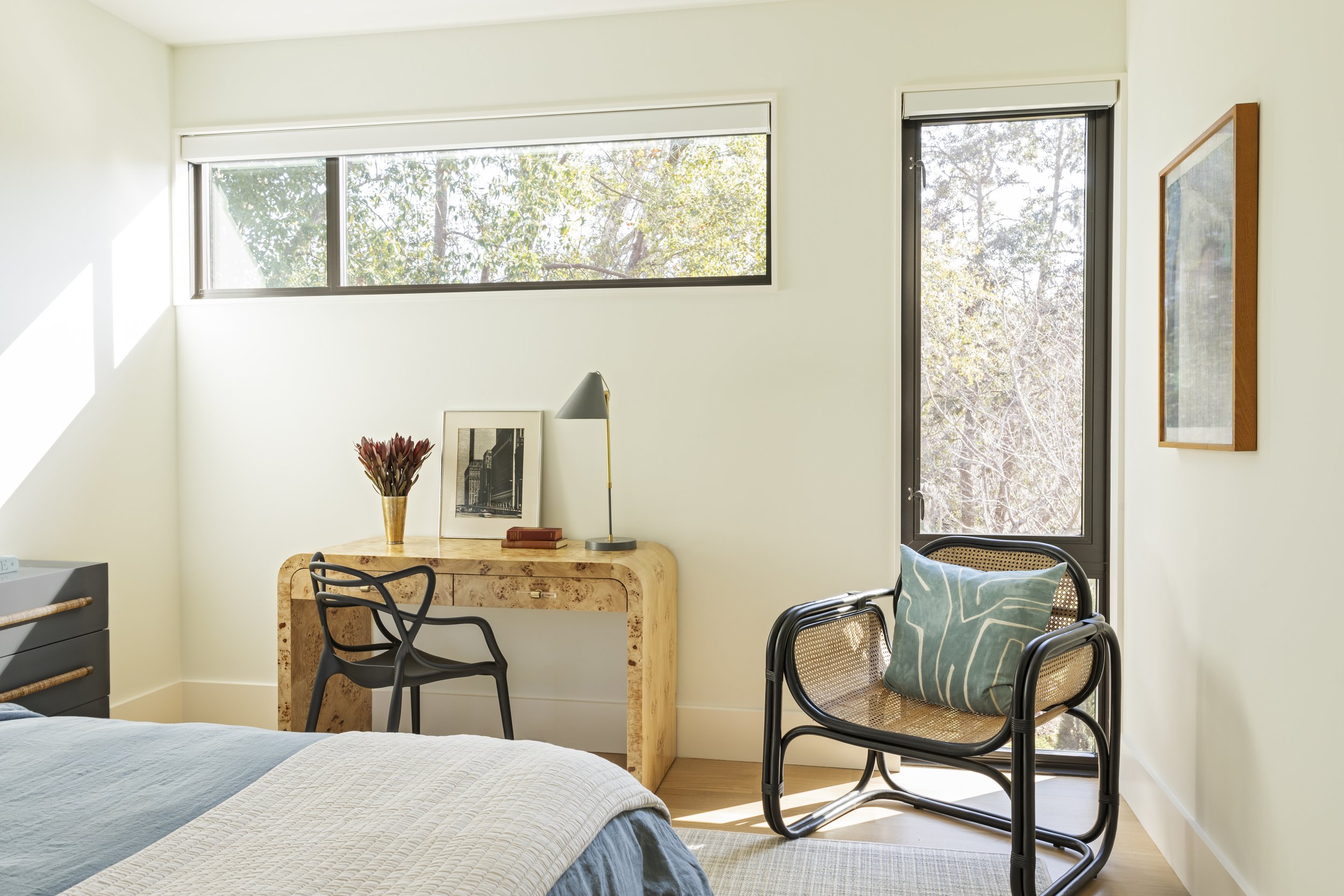
Primary bedroom for a mid-century modern inspired house on the Stono River. [Rush Dixon Architects, Interiors by Allison Elebash, Photo by Julia Lynn]

Yes, Bedrooms Should Have Windows

March 31, 2023

In case you missed it last month, during a Gothamist interview about addressing the housing affordability crisis, NYC Mayor Eric Adams questioned the need to require windows in bedrooms stating “You know, when you sleep it should be dark.” This got many of us in the design industry and beyond imagining a trend of lifeless spaces negatively impacting its occupants. Admittedly, the housing crisis is real, layered and requires a new set of approaches to move the needle; there were many strategies discussed including tax incentives, allowing Single Room Occupancies (SRO) again and the conversion of vacant office buildings into residential spaces (all worthy topics for another blog entry.) And as to not cherry-pick sound bites, the entirety of the mayor’s point was this: “Why can't we do a real examination of the rules that state every bedroom must have a window? You know when you sleep it should be dark. Instead of doing that, have studio apartments with shared living and working spaces.”

First, an important distinction: a studio apartment with windows is very different than allowing multiple windowless bedrooms in an apartment unit or multi-family building. Additionally, compared to being houseless, a safe, lockable shelter, even without a window, is an improvement…but not as a permanent housing solution. Unfortunately, this was not the first time the idea of windowless bedrooms was pitched as a cost-effective solution. Take Munger Hall, a massive dormitory planned for the University of California Santa Barbara which we first learned about via this 99% Invisible podcast. Carolina A. Miranda writes in the LA times “Munger Hall, a.k.a. “Dormzilla,” the warehouse-sized dormitory proposed (and designed) by billionaire non-architect Charlie Munger — a building whose primary architectural feature consists of sleeping rooms that lack windows and therefore access to fresh air and natural light. In lieu of windows, his concept features LED lights — “virtual windows” — that can be adjusted to mimic daylight patterns. As I have previously reported, the proposal flies in the face of years of research on the importance of having access to natural daylight in architecture.” While this approach puts a large dent in the campus housing deficit, we can’t help but wonder at what cost to the well-being of the occupants.

Mayor Adams added the point, “We can’t be so idealistic that we’re not realistic.” Perhaps that is true, in the ‘Don’t let perfect be the enemy of good’ category, but we should not ignore some basic lessons learned on providing a positive built environment for all. So, yes, Mr. Mayor, bedrooms need windows. In fact, most rooms should have windows if it is able to be occupied for long periods of time and does not prevent the required function from occurring such as movie theaters, art museums, and storage facilities. The built environment is not meant to ‘store’ human beings in the most efficient way by weakening precedented building codes and architectural tenets. It should at a minimum provide a safe shelter for its inhabitants and an inspiring sanctuary to create a place of one’s own, dream, gather with family, and yes, even look at the stars from your bedroom window at night. Here are four pre-requisites we believe are relevant as alternate housing solutions are created:

Primary bedroom in Mount Pleasant, SC. [Rush Dixon Architects, Ebony Ellis photographer]

LIFE SAFETY

The International Residential Code R310.1 requires emergency escape and rescue openings for every sleeping room. Stating “Emergency escape and rescue openings shall open directly into a public way, or to a yard or court that opens to a public way” and includes minimum sizes of the opening. The code commentary, which pulls from precedent and historic events, explains “Because so many fire deaths occur as a result of occupants being asleep in a residential building during a fire, the code requires that all basements, habitable attics and sleeping rooms have windows or doors that may be used for emergency escape or rescue. The requirement for emergency escape and rescue openings in sleeping rooms exists because a fire will usually have spread before the occupants are aware of the problem, and the normal exit channels may be blocked.”


HEALTH / VENTILATION

A dramatic part of multi-family housing design history, and one we should drastically learn from, is tenement housing. In the 1800s, as NYC was seeing a large influx of immigrants, structures that contained multiple living units with little thought given to health and safety were built to house the masses. A Smithsonian article states, “Four to six stories in height, tenements contained four separate apartments on each floor, measuring 300 to 400 square feet. Apartments contained just three rooms; a windowless bedroom, a kitchen and a front room with windows. A contemporary magazine described tenements as, ‘great prison-like structures of brick, with narrow doors and windows, cramped passages and steep rickety stairs. . . . In case of fire they would be prefect death-traps, for it would be impossible for the occupants of the crowded rooms to escape by the narrow stairways.’” The Tenement Reform Law of 1879 provided minimum standards for light and ventilation.


NATURAL LIGHT

Humans are wired to be connected to the natural environment. Is it sunny? Raining? Cloudy? Can you see the moon? Exposure to natural light is linked to improved health, productivity, sleep, and mood. Click here for NC State’s article on the benefits of exposure to natural light and here for more on biophilic design. In an era where the average American spends 90% of their time inside and more people live in cities than rural areas, attention to the design of the built environment to increase well-being and a connection to nature is paramount. Moreover, studies have shown increased recovery rates in surgery patients if their room has a view of nature compared to a view of a brick wall - imagine if there were no windows.


DECENCY

There is a theory that those individuals leading the charge about loosening code regulations resulting in windowless bedrooms are likely not going to be the folks living in them. “Developers are trying to cram people into small, dark places, which is symptomatic of a much wider failure to provide the kind of decent housing that we need,” Hugh Ellis, head of policy at the Town and Country Planning Association. As alternatives are imagined, a baseline of decent, even if modest, housing types should be strived for. A guiding light for equity and reverence in the most modest of dwellings is the late Samual Mockbee, founder of Auburn University’s Rural Studio. Paramount lessons beyond design and construction are those in human decency, class and racial differences. Working with the smallest of budgets, the design-build studio strived to create dwellings for Alabama’s poorest county. “It’s got to be warm, dry, and noble.” Samuel Mockbee

So, yes, we can and should do a ‘real examination’ moving forward - just not one that ignores history or humanity.

More reading on the topic:

  • “Wait, Are Windowless Bedrooms Going to Be a Thing” Architectural Digest

  • “Mayor Adams Calls for New Tax Breaks, Dormitory Housing in NYC to Ease Affordability Crisis” Gothamist

  • “The Return of Dormzilla” 99% Invisible

  • “Tenement Life” Smithsonian

  • “Shining Light on What Natural Light Does for Your Body” NC State

  • “View Through a WIndow May Influence Recovery from Surgery” Health Design

  • Rural Studio (book review)

Guest bedroom for a mid-century modern inspired residence in Charleston, SC [Rush Dixon Architects, Interiors by Allison Elebash, Photo by Julia Lynn]

In All, News Tags housing, housing crisis, design, residential design, architecture, residential architecture, building code, biophilic design, biophilic, bedroom windows, windows, egress, life safety, natural light, tenements, Tenement Reform Law of 1879, tenement reform, mayor eric adams, gothamist, smithsonian, daylight
1 Comment

Rendering of the Treetide Office Building planned for Mount Pleasant, SC.

Treetide Office Building

February 27, 2023

The design approach for this 11,000sf office building responded to the historic 49” Live Oak tree on the property, both literally and figuratively. The “L” shape footprint wraps the tree allowing for a strong visual connection for the building occupants and a passive outdoor gathering area under its limbs. The building facade explores repetition of understory trees through the repeating brick pilasters and weaves abstract patterns and textures of bark and leaves into the detailing.


Aiding in the study of biophilic design, the prominent tree on the property served as the main driver of decisions related to the site design, landscape architecture and building design. An effort was made to ensure that the building and its occupants be able to engage with the tree in a meaningful way. This engagement began with a metaphor of the canopy trees and the understory trees. As the proverbial understory trees, the building attempts to embody patterns, textures, rhythms, and filtered light as a way to connect the building and those inside to the natural landscape while preserving the historic tree.

The resultant design evokes a solidness and sturdiness as well as vast amounts of glass allowing all of the interior workspaces to be visually connected to the outdoors. Chevron details in between the brick pilasters are derived from patterning found in nature while wood elements bring a warmth to the structure.

General Contractor: Harbor Contracting

Civil Engineer: Seabrook Engineering

Landscape Architecture: The Tomblin Company

Architecture: Rush Dixon Architects

Structural Engineering: ADC Engineering

MPE Engineering: Charleston Engineering

In All, Projects Tags office building, office building design, commercial architecture, mount pleasant, modern architecture, biophilic design, biophillic, charleston real estate, architecture, rush dixon architects, Harbor Contracting, seabrook engineering, the tomblin company, ADC Engineering, Charleston Engineering, modern design, design concept, brick, wood, glass
Comment

Bookshelf: 'Nature Inside - A Biophilic Design Guide'

January 31, 2023

“An underlying premise of incorporating nature into the built environment is that when people are regularly in contact with nature, personal health and well-being will improve in a manner and to a degree that contributes meaningfully to public health, community resilience and environmental stewardship.” Catherine O. Ryan + William D. Brown

In their new book, “Nature Inside: A Biophilic Design Guide” published by RIBA in 2021, William D. Browning and Catherine O. Ryan share a comprehensive look at what biophilia means and how biophilic design can benefit the inhabitants of the built environment. In an era where the average American spends 90% of their time inside and more people live in cities than rural areas, attention to the design of the built environment to increase well-being and a connection to nature is constantly on our minds. As architects, this book proved to be an inspiring resource for our current and future work; see below for our take-aways.

DEFINITION

Biophilia is defined as the innate human instinct to connect with nature and other living beings. Bio (life) + Philia (to love) was first coined in 1964 by the social psychologist Erich Fromm and gained traction in the mid 1980s after Edward O. Wilson published “Biophilia: The Human Bond with Other Species.”  Biophilic design explores the connectivity of the built environment to the natural environment through the use of direct nature, indirect nature and space / place conditions.


PATTERN LANGUAGE

1 NATURE IN THE SPACE: This includes a visual connection with nature from inside the building, non-visual connections (auditory or haptic for instance), presence of water and light patterns that create conditions similar to those that occur in nature.

2 NATURAL ANALOGUES: Incorporating biomorphic forms and patterns that are symbolic references to patterns and textures found in nature.

3 NATURE OF THE SPACE: Interesting thoughts about the preferred landscape being the Savannah which includes both “Prospect” (an unimpeded view over a distance for surveillance and decision making) and “Refuge” (a place for withdrawal, from environmental conditions or the main flow of activity in which the individual is protected from behind and overhead.)


SCIENTIFIC CASE

Healing and Stress Reduction was famously tested by Roger Ulrich who studied two groups of surgery patients - one had a view of nature from their rooms and the other had a view of a brick wall out of their windows. The group with the view of trees and shrubs took less recovery time overall, had fewer nurse calls and took less painkillers. And in a tee-up for the term ‘forest-bathing’ - “In Japan and Korea, research has been conducted to gauge the effect of walking or sitting in a forest as opposed to walking or sitting on an urban street. The time in the forest led to lower measurements of blood pressure, heart rate and the cortisol stress hormone.” Cognitive response was also studied to test the theory of increased cognitive capacity after exposure to nature. 


BUSINESS CASE

Understanding that some folks may need additional data to incorporate biophilic design elements into their building, the book includes evidence of direct economic benefits including productivity levels, retail sales and property value. Specific to the office environment, a healthy space with proper air quality, designed with natural elements incorporated has been shown to reduce absenteeism and improve employee satisfaction. Biophilic design goes beyond sprinkling some plants through out the office; reference this chart from the book for a synthesized look at what Biophlic Design Patterns improve physiological responses, cognitive functioning and emotional / mood baselines. (Our two cents - no amount of great design will neutralize toxic work environments caused by humans and unrealistic productivity expectations which is a very real epidemic.)

BIOPHILIC DESIGN IN THE OFFICE

We can all agree that the evolution of office workplace has had some lows as more of the work force moved away from agricultural and factory settings into offie space - think of the monotony of cubicle farms with high walls obscuring any windows. “For most adults, the workplace is where substantial daytime hours are spent…emphasis on effective daylighting, thoughtful spatial configurations, a multi-sensory experience and when possible, natural ventilation strategies, interior greenery and ample views to nature, create dynamic and healthful workplace experiences. The case study comparison of COOKFOX Architects’ offices demonstrate this concept through increasing daylight and views, providing access to outdoor green rooftops and the use of natural materials among other strategies.

In the words of Thomas Heatherwick from the book’s introduction, “Nature has infinite lessons for designers.” We are taking notes.

In All, Bookshelf, Inspirations Tags biophilia, biophilic design, nature inside, william d. browning, Catherine O. Ryan, bookshelf, deisgn book, architecture, modern architecture, green architecture, riba, cookfox
Comment

Happy Holidays!

December 4, 2022

Happy Holidays from our workshop! Thank you for your continued trust and collaboration as we wrap up another year of designing in our community. 

Rush + Judy Dixon | Rush Dixon Architects

In All, News Tags architects, north charleston architect, north charleston, park circle, mixson, studio, design studio, architect's studio, architect's office, happy holidays, sketchbook, sketch, pen and ink drawings
Comment

Stono River Residence published in Luxe Magazine

November 14, 2022

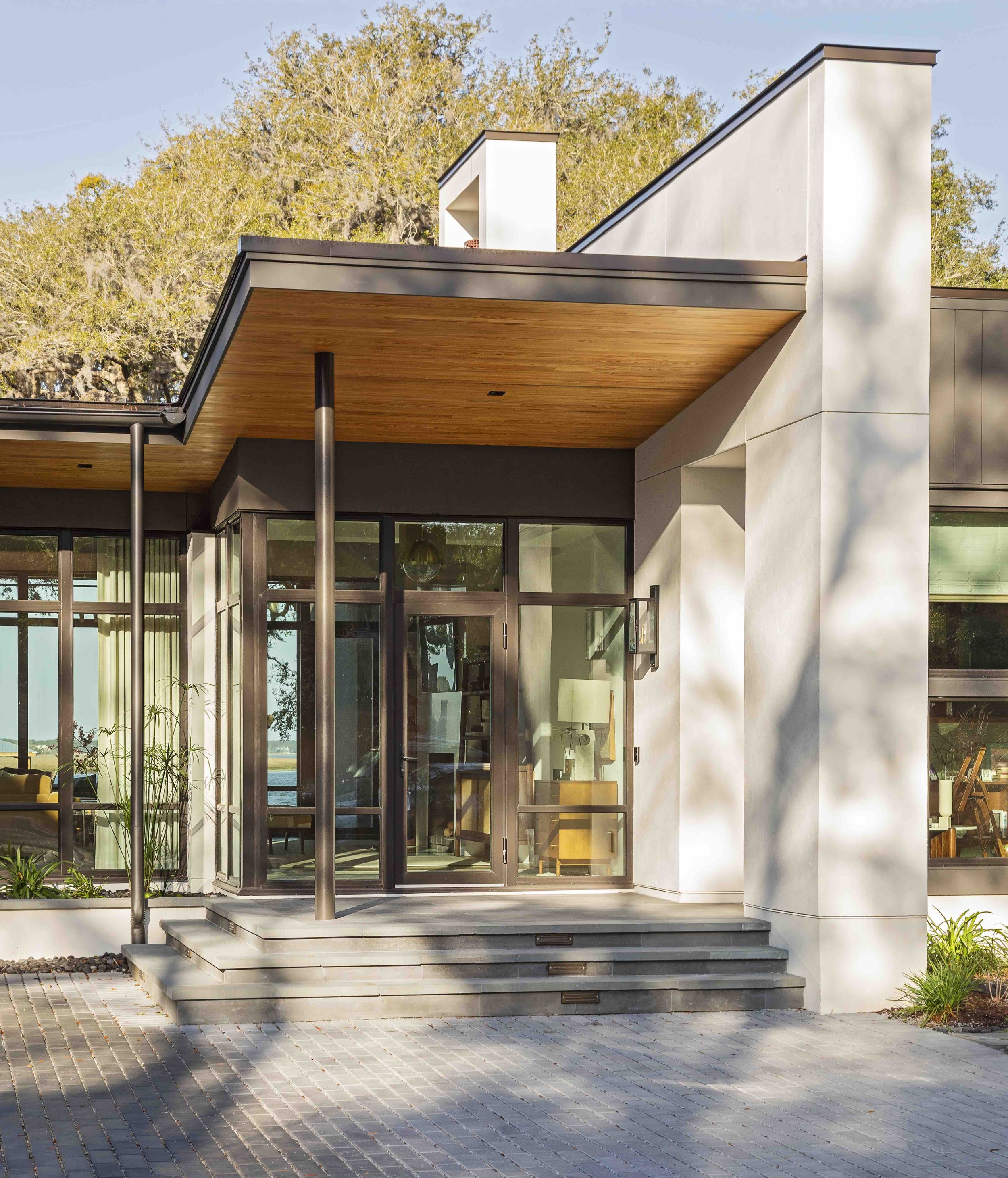
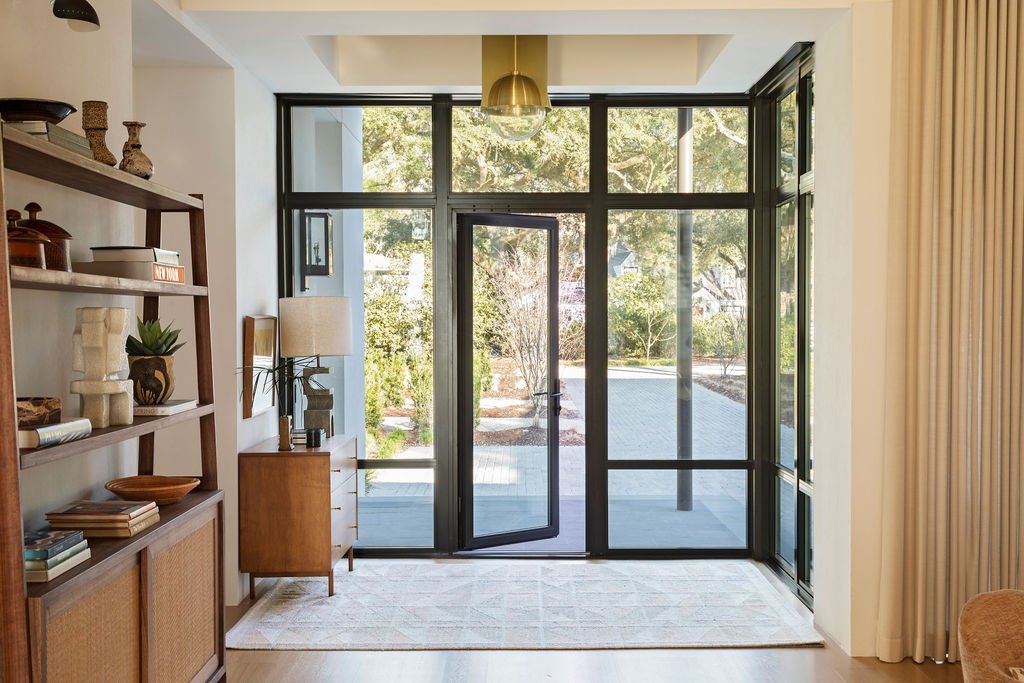
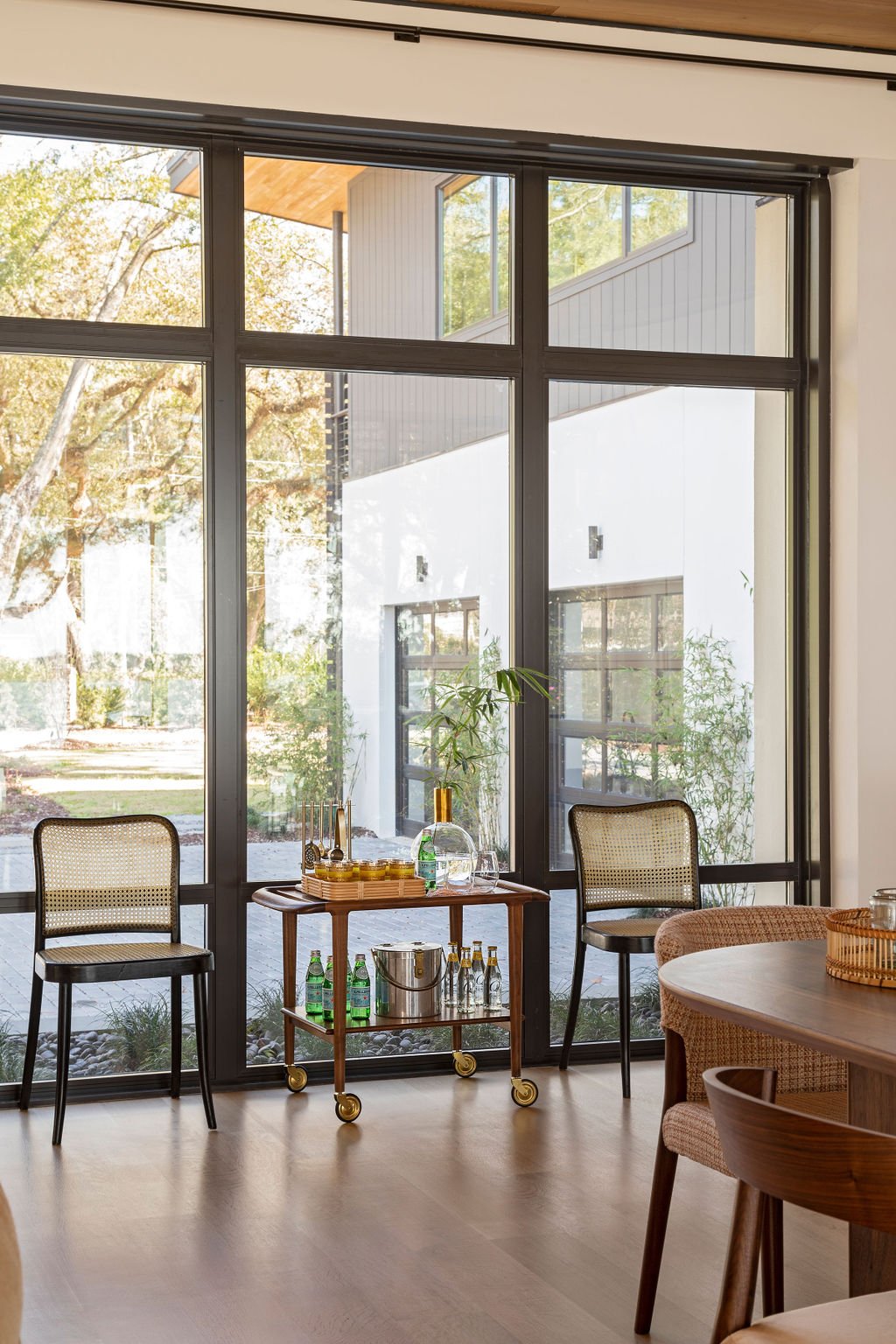
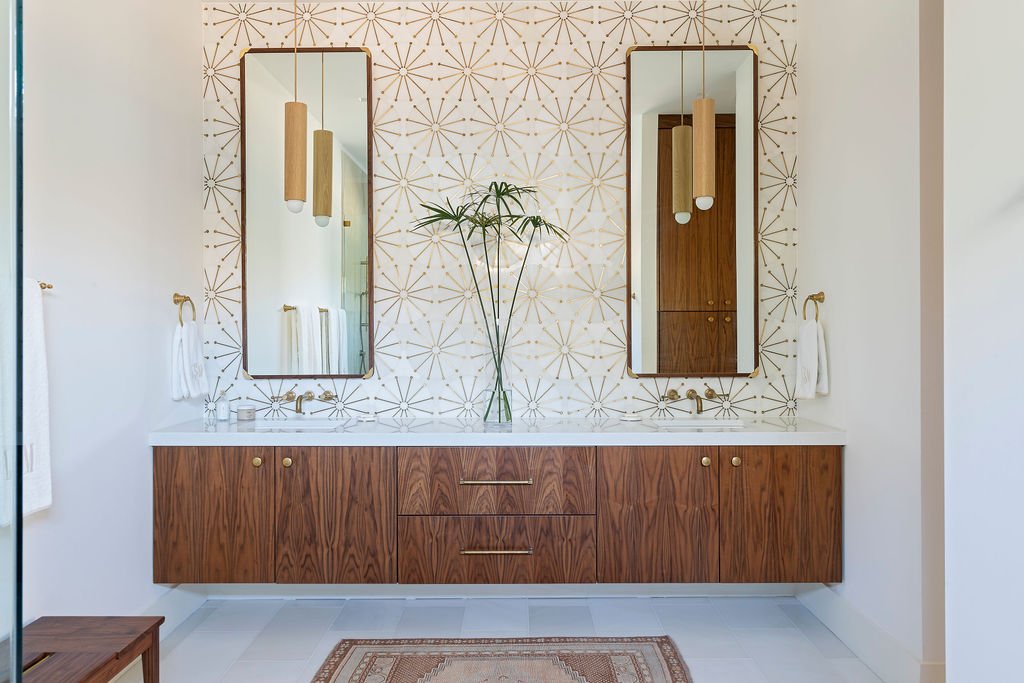
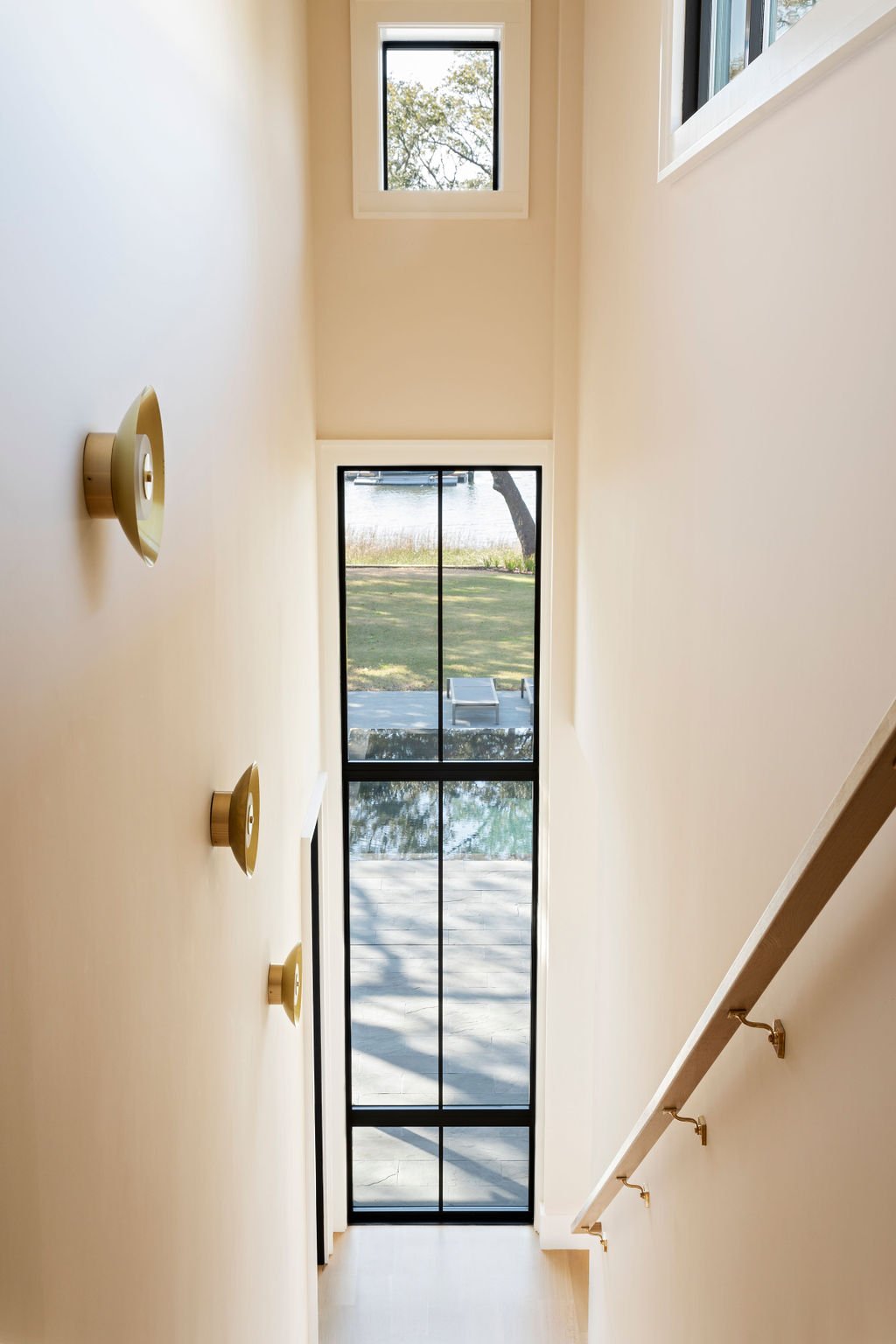
Inspired by mid-century architecture, this modern residence located in Charleston, South Carolina captures Stono River views with transparency and clean detailing. Forever thankful for our clients who trusted us and the collaboration with these pros:

Landscape Architect: Steve Dudash

Interiors: Allison Elebash

Builder: Cline Homes

Photography: Julia Lynn

Styling: Kate Malpeli

Author: Stephanie Hunt

125Stono-144 crop.jpg
125Stono-5.jpg
125Stono-15.jpg
125Stono-50.jpg
125Stono-61.jpg
125Stono-80.jpg
125Stono-101.jpg
125Stono-124.jpg

Excerpt from Luxe Interiors + Design Southeast Nov/Dec 2022 by Stephanie Hunt:

“The sun slipping beneath the horizon of Charleston’s Stono River affords a view unlike any other. The languid humidity, lingering nearly the whole year here, filters light like a kaleidoscope, tossing color to and fro. Frame this scene in the arms of majestic, moss-draped oaks, and it’s enough to take your breath away.

Such were the natural gifts of a picturesque Charleston property, where one couple hoped to capture these Lowcountry dreamscapes from every angle. Although the pair had adored a steel-and-glass addition at their previous, more traditional home, the Stono River site afforded the opportunity to indulge their midcentury preferences from the ground up. A respected real estate developer in the area, the husband already had collaborated with architects Rush and Judy Dixon on several commercial projects in the past, which made teaming up for a new residence a no-brainer. “This house is all about the view and connection to the water,” reveals Judy, adding that a benefit of embracing a modernist discipline is its inherent minimalism. “From our first meeting, these clients were clear they didn’t want something grand, fussy or ostentatious; rather, a home that would be organic, eclectic and clean,” she continues. “They understand the power of simplicity.”

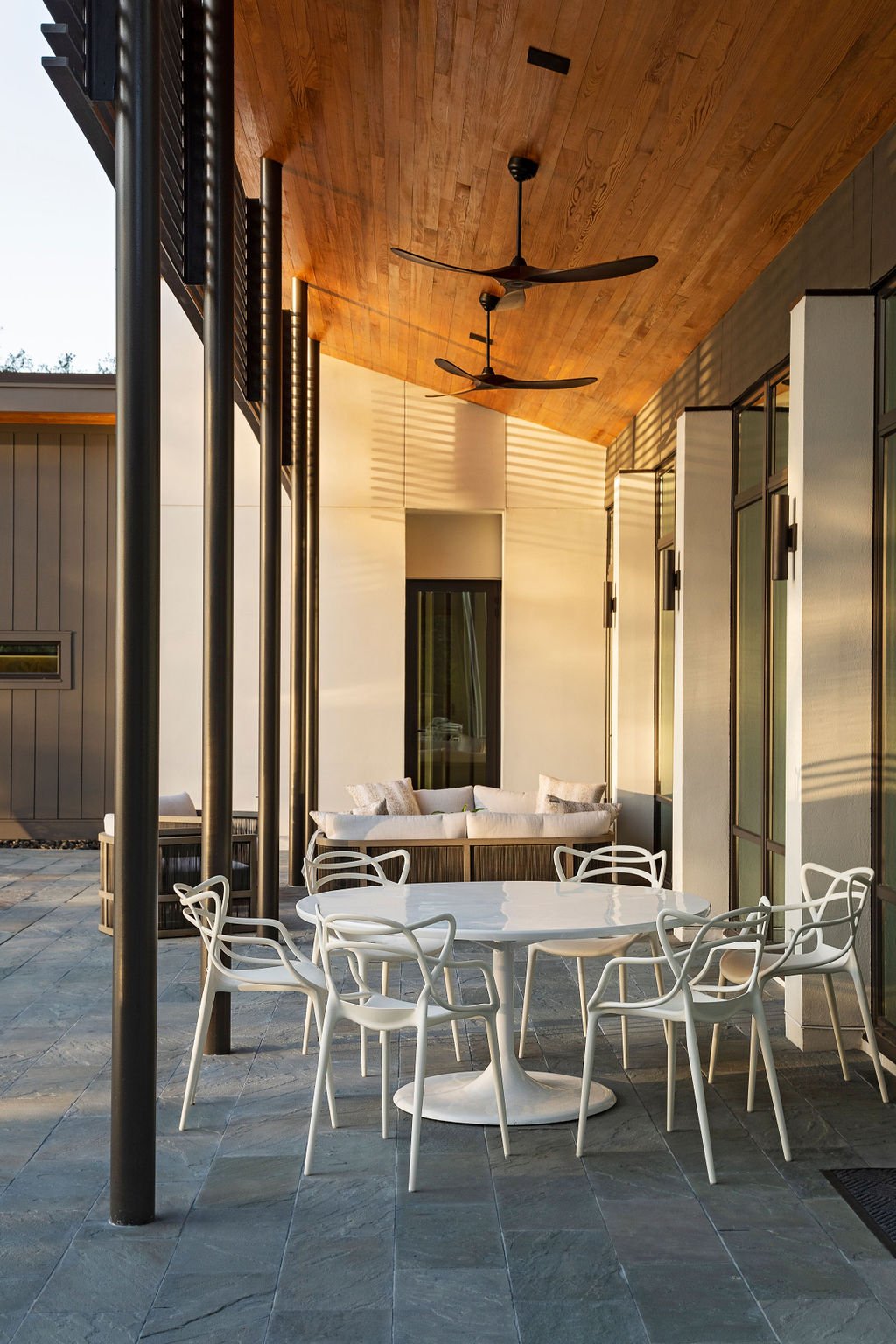
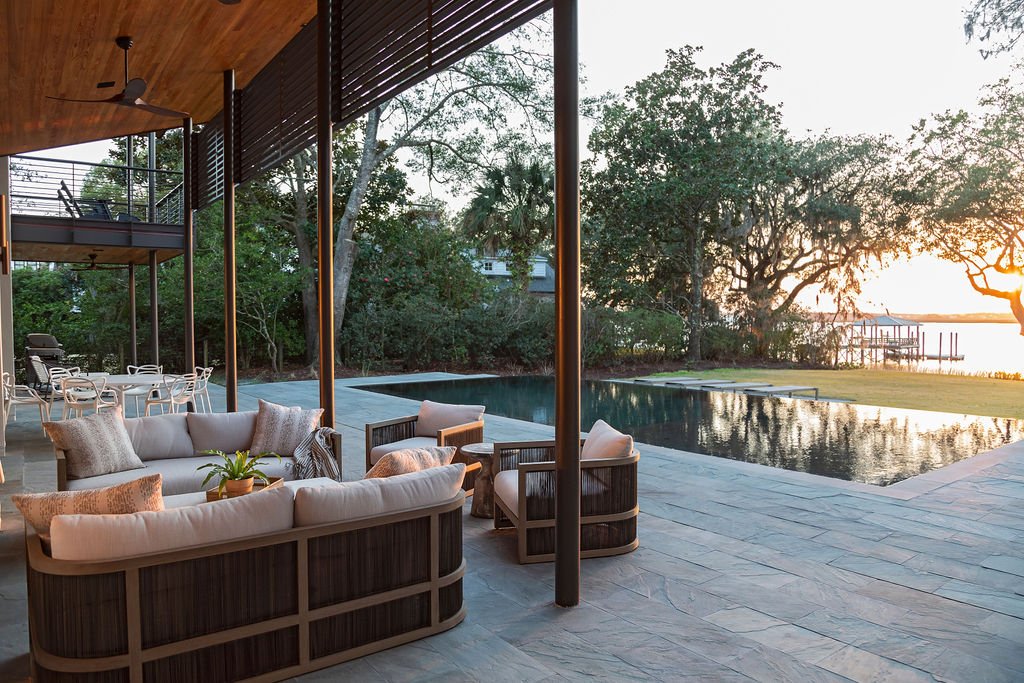
Joining the project from the outset, landscape architect, Steve Dudash had the fortune of consulting heavily on the home’s siting, even directing a 180-degree flip in orientation to best capture the sunset views. To further leverage the river vistas and blur boundaries between inside and out, the Dixons devised a transparent, open living space. Bound by glass on two sides, it’s bookended by the primary suite as well as a two-story tower hosting additional bedrooms and a den. “The main living area easily absorbs all comings and goings when everyone is busy at home, but it still feels intimate when it’s just the two of them,” Judy says. “It was essential that every room, every space, feel comfortable on a personal scale, and with a connection to nature.” In the public spaces, cypress ceilings, soffits and a louvered overhang that filters strong afternoon sunlight all speak to local natural materials. Such details underscore the tireless efforts of buider Jay Godefroy and his team, including design coordinator Alexandra Frick. “Jay was exceptionally patient and thorough,” reveals Rush, who ensured a nod to classic Charleston vernacular by way of a white stucco facade.

Serenity comes not only from the breathtaking location, but from the simplicity of the interiors, where designer Allison Elebash capitalized on the Dixons’ modernist hallmarks. She anchored the main living area, for example, using a curved sofa with 1970s notes. “Solving the seating configuration in such a large horizontal space was tricky,” admits Elebash, adding that its embracing shape and golden mohair upholstery smartly combine form and function: lush to the touch, but durable enough to stand up to daily life. “I loved the practicality of these clients,” continues Elebash. In every part of the house, “they wanted to avoid anything extraneous; everything is purposeful.”

A custom walnut dining table bridges the area between this gathering space and the kitchen, where a calming palette of earth tones and sky blues is expressed through a dark gray island countertop and azure leather stools - all streamlined, per the clients’ request, so as not to compete with the views. But Elebash pushed back against the husband’s “no maintenance, no upkeep” pragmatism when it came to the kitchen backsplash. “I insisted we go with real marble,” recounts the designer, who specified a book-matched slab of Calacatta Namibia because “nothing beats the drama of natural stone.”

Situating the pool deck to capture the same sight lines as the house, however, required no cajoling. “Everyone agreed on the size, shape and location of the infinity pool, which would be surrounded by a bluestone patio,” Rush recounts. “The owners’ bedroom wraps around it, so again, there’s a connection from their personal space as well as the living room.” Keeping the pool and patio on the same elevation as the house likewise guaranteed the outdoor areas - updated by Dudash with fresh plantings of beautyberry, African iris, Foster holly and more - would be a seamless extension of the interior.

From this vantage point, the homeowners can fully soak up their fulfilled vision: a modern homage to Charleston’s ancient landscape that marries old and new, indoors and out, natural and man-made, with peace and practicality. After all, as the storied river and old oaks know, simplicity is best when nature’s beauty is so abundant.”

In All, News, Projects Tags mid-century, mid-century modern, modern, modern design, modern art, modern interior design, modern architecture, modern house, modern architect, modern coastal, regionalmodernism, east coast modern, contemporary home design, contemporary, contemporary architecture, custom residential, custom home, custom home design, custom cabinetry, charleston, charleston modern, modern charleston, modernist, rush dixon architects, allison elebash interiors, julia lynn photography, kate malpeli stylist, stono river, stono river residence, cypres, stucco, cementitious siding, graham windows, white oak floor, luxury home, luxury residential, luxury home design, coastal architecture, coastal vernacular architecture, interior design, interior architecture, coastal, charleston interior design, charleston architecture, charleston architect, design, luxemagazine, luxeinteriors, luxearchitecture, stonoriver, coastal mid-century, modern home
Comment
← Newer Posts Older Posts →

Latest Posts

Featured
photo-output.jpg
May 3, 2026
The Kenny Mile Foundation
May 3, 2026
May 3, 2026
view 1 copy.jpg
Feb 1, 2026
Dayfield Park - A Modern Interpretation of Suburban Commercial Center
Feb 1, 2026
Feb 1, 2026
J36A2025.jpg
Jan 3, 2026
Throwback - Rush3 Product Design Studio
Jan 3, 2026
Jan 3, 2026
photo-output crop.jpg
Jan 3, 2026
A Love Letter to Massimo Vignelli
Jan 3, 2026
Jan 3, 2026
JimiSmithPhotography_10.jpg
Oct 1, 2025
Forbes Best-In-State Residential Architects
Oct 1, 2025
Oct 1, 2025
#11 copy.JPG
Sep 21, 2025
Barkitecture 2025
Sep 21, 2025
Sep 21, 2025
RDD4 avian.jpeg
Jul 4, 2025
Camp Hall Ranked #1 Industrial Park + Maker Space
Jul 4, 2025
Jul 4, 2025
3.jpg
Jun 27, 2025
Summerville Adaptive Reuse - Servis 1st Bank
Jun 27, 2025
Jun 27, 2025
photo-output crop.jpg
Jun 7, 2025
SCNOMA's Project Pipeline
Jun 7, 2025
Jun 7, 2025
1 sm.jpg
Jun 1, 2025
Treetide Office Building
Jun 1, 2025
Jun 1, 2025

Rush Dixon Architects, LLC | Charleston, SC + Saluda, NC